CAN bus decoder - steering wheel buttons
The screen says the decoder is quiet and the buttons on your wheel do nothing. Quite often the box is fine and your car is telling the truth about a wire.
I get this call most weeks. Your screen is in, the map loads, the radio plays, and the volume button on the wheel does nothing. The owner has usually decided the decoder is dead and is halfway to ordering another one. I've found that guess wrong more often than right, and twenty minutes with a meter usually beats a week of waiting for a parcel you didn't need.
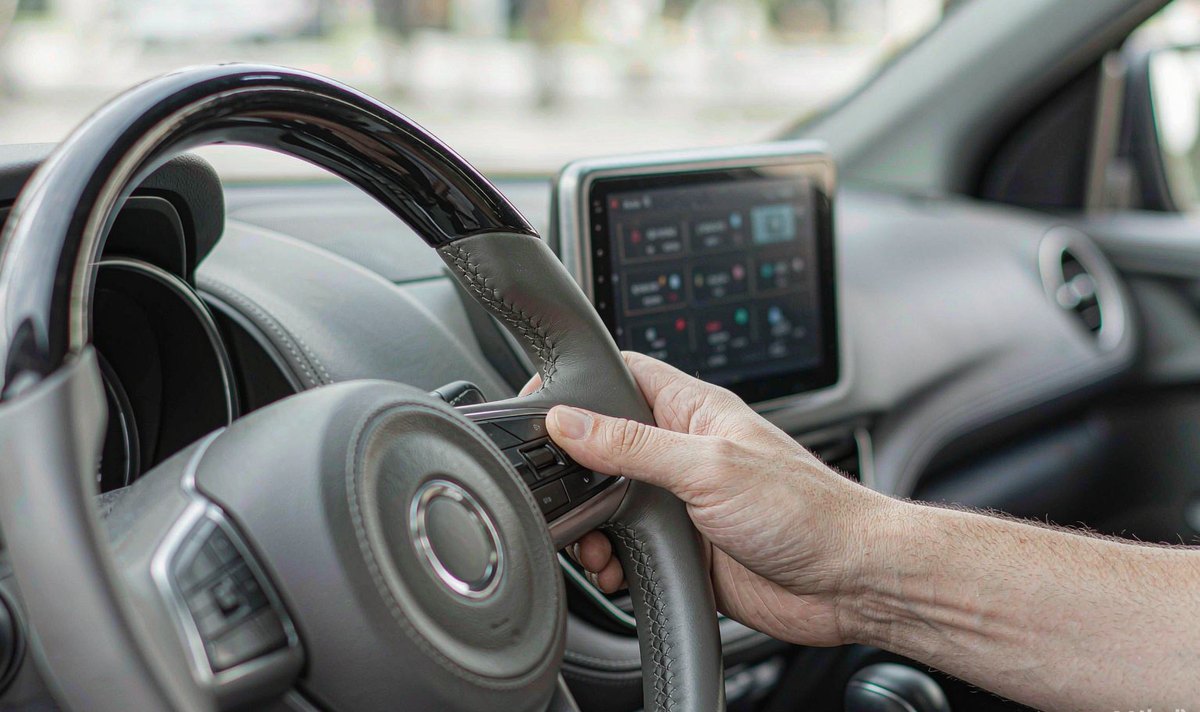
Your buttons don't act on the radio directly. On a car built with a data bus they talk to a module in the steering column, that module puts a message on a bus, and a CANBUS decoder box under your dash listens for it and hands the result to the head unit. Four links in that chain can fail, and the screen shows you the same two words for every one of them. That's the annoying part, and I hear it every month.
The message comes from the radio's microcontroller, not from your car: it stopped hearing frames from the decoder, or never linked with it at boot. That's a statement about two boxes under your dash, not about your car.
Three failures produce it: no supply to the box, a pair it can't hear, or frames it hears and rejects. Only the third is a matching problem.
Before you touch a wire, separate the cases by what your car still does. This is the table I run through on the phone.
| What you see | Points to | Stopgap | Real fix |
|---|---|---|---|
| Status says no signal and nothing bus-driven works: no door graphic, no climate line, no night dimming | Supply, ground, or the pair not connected at all | None. There's no shortcut past a meter here | Repair the supply, the ground or the pair |
| Status shows a signal, doors and lights are right, wheel buttons are dead | Buttons on another path, or keys never learned | Run the steering learn screen once | Map the keys, or fit a box that carries the frame |
| Works for a minute, then the status goes blank | A joint that opens when the dash warms or the car moves | Wiggle test with the engine running | Re-terminate the connector properly |
| No signal, and the buttons worked on the old radio | Wrong vehicle profile, or a tap on the wrong bus | Try the neighbouring profile, then power-cycle | Correct profile or correct tap point |
How I read it: if the door and climate lines are alive, your pair is alive, so go to the profile. If they're dead too, the box is starved or deaf and no menu will save it.
Do these in order and don't skip to the meter. In our experience the box is rarely the part that failed, and the fix is often a full power cycle after a profile change while a replacement sits in a drawer.
Off, key out, door open, then back on. The microcontroller reads the decoder config at boot, so a profile change that never sees a cold boot looks like a failure.
Door graphic, climate line, night dimming, reverse trigger. If those work, the pair is alive and the decoder is hearing something.
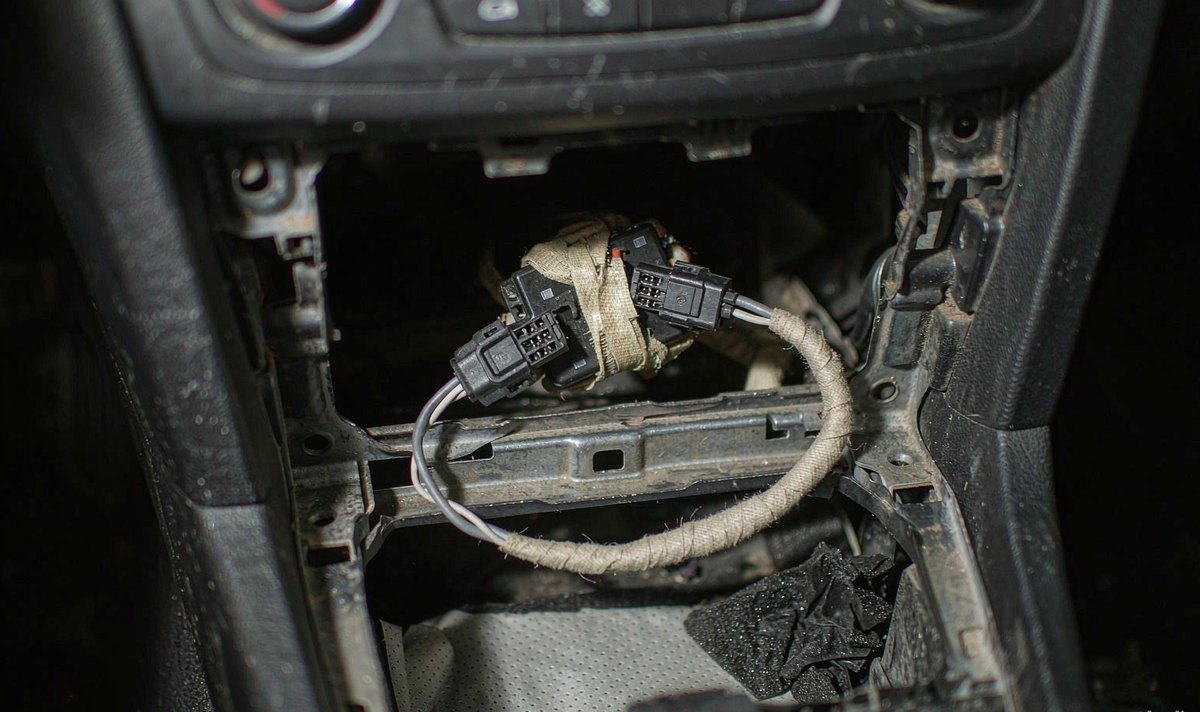
Ignition off, one connector at a time. Look for a pushed-back pin or green corrosion before you push it home.
No signal, no CAN data and decoder offline are three different messages on some builds. Photograph the screen so you can compare after each change.
One more free move: write down the profile you picked, including the body variant. Picking the same model name with the wrong amplifier or navigation option is a silly miss, and it gives you a live bus with silent buttons. If the menu offers a second entry that looks nearly identical, try it, cycle the ignition, and test one button, or you won't know which change did what.
Now the meter. None of it needs a diagnostic tool; twenty minutes with two probes beats another afternoon of guessing at menus.
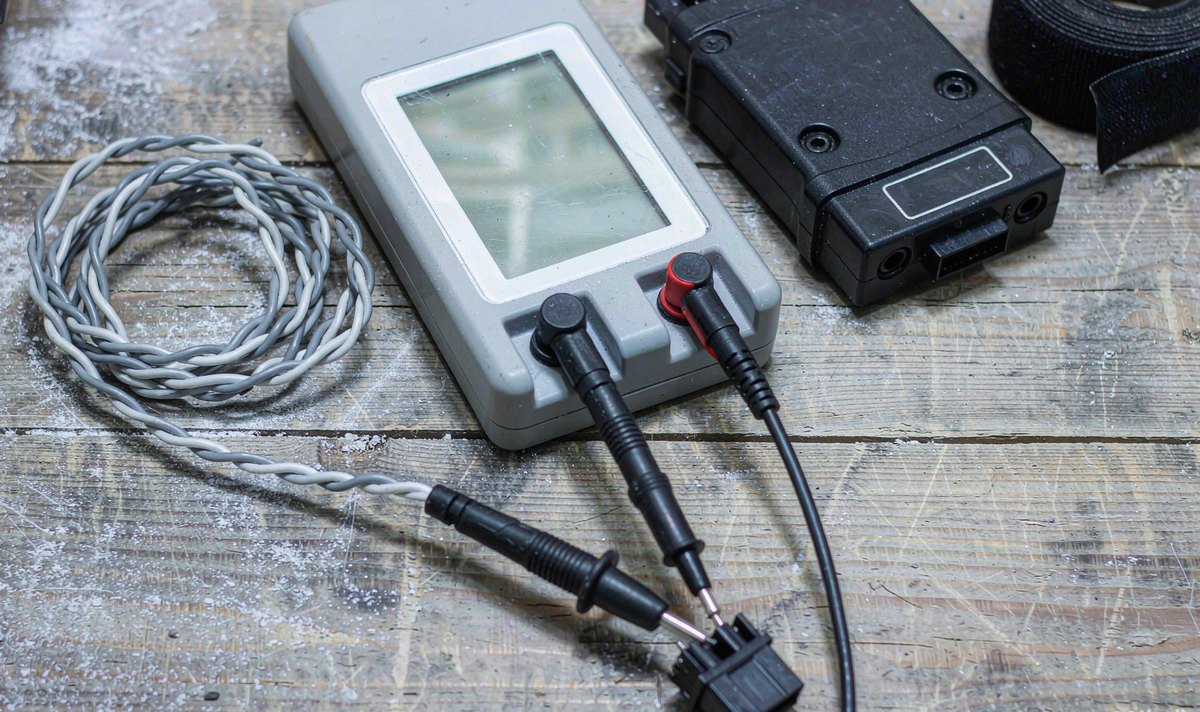
With the ignition on, you'll want battery voltage at your decoder's permanent feed and close to it at the switched feed. Ground is the one you'll be tempted to skip: measure from the decoder's ground pin to a clean chassis point, and if you read more than a fraction of a volt while the unit runs, that's your fault. A ground that's good at rest goes bad under load, which is exactly why your box dies when your screen wakes up.
On a healthy bus both wires sit near 2.5 V with the key on; a steady meter won't catch a frame's 2 V swing, and that's fine. What you're checking is that neither wire sits at 0 V, 12 V, or floating. Key off, unplug the decoder and measure resistance across the two wires on the car side: near 60 ohm means two 120 ohm terminators are still in circuit, which is what ISO 11898-2 expects. An open circuit or a short to ground means your pair is broken before any box could work, and that's maddening when the box is new.
Two habits cause most of these faults. The first is a Scotchlok tap on a moving loom, which cuts strands and then corrodes. The second is an android car stereo wiring harness adapter with CAN-H and CAN-L swapped at the plug: the radio boots, your screen works, and the decoder hears a pair that makes no sense to it. If readings look healthy at the car side and dead at the box, check that swap on your loom before anything else, because that usually turns out to be the plug, not the box.
If your supply is good and the pair is alive, the argument is about which messages the box listens for. Three parameters decide it.
Which bus did you tap? A car can carry several: a fast powertrain bus, a slower comfort bus, and single-wire links for local switches. Wheel buttons often reach the column module over a slow single-wire link and are republished on the comfort bus. Tap the diagnostic socket instead and you may get the powertrain bus only, which never carried those frames. That install looks perfect and can never work, and what I see most often is a well-wired android head unit CAN bus decoder box reporting silence for exactly this reason.
Is the profile right for the year and trim? A model name isn't enough. A mid-cycle change, a different amplifier or a factory navigation option can move the button frames. A profile for the same car two years earlier usually turns out to show doors and lights correctly and still miss your wheel.
Does the box need the wheel layout? On cars with analog buttons the decoder measures a resistor ladder and the unit learns the values. On bus cars there's nothing to learn; the mapping arrives in the frame. If a learn screen accepted your presses and the buttons still do nothing, your unit isn't receiving frames, and re-learning is a tedious waste of an afternoon.
The column module is mirrored by market, so the same car sold in Europe as a left-hand-drive model and the right-hand-drive version elsewhere can carry a different part number and different frame content. Confirm whether your car is left-hand drive or right-hand drive, and quote that when you ask for a decoder.
A decoder translates. It doesn't replace a module that has failed, doesn't repair a bus that's shorted somewhere else in the car, and can't invent a frame your car never published. If the column module itself is dead, a new decoder changes nothing. That's why a module fault code beats any radio menu.
Only now, with readings in hand. A decoder's small; the wrong one costs time, not money.
Quote your car, not your radio. Give your seller the model year, the body variant and your VIN. A decoder listed for your model but built for another year will fit the plug and fail on the frames.
Keep the loom, replace the box. Most looms are fine; the box is what gets cooked behind a heater duct. A box on its own is cheaper and saves re-running a loom.
Ask which bus it reads. A seller who can say whether the box listens on the comfort bus, and where it expects to be tapped, has answered the question that decides whether it works. If they can't, the label is all you have.
If your car is an older model with analog wheel buttons and no factory bus at the radio, the question changes: there's nothing to decode and you need a unit that reads resistance. That's where retrofit android head unit for older car jobs go wrong, and it's worth confirming before you buy. A unit with real support for android car radio with steering wheel controls will say which of the two it handles.
At WITSON the decoder option is listed per model rather than one universal box, because frame content moves with the car, and the specs live on the model pages. If you own one of our units and the status screen has gone quiet, send the model, software version and a photo of the decoder label; we'll tell you which profile that build expects.
Send us the model year, the body variant and a photo of the decoder label, and we'll confirm which profile and which tap point your car needs before you order a part you may not need.
Tell us your car, we will check what fits01Can I fix a CANBUS box no signal fault without a diagnostic tool?
For supply, ground and the pair, yes: a voltmeter covers all three. What you can't confirm that way is a failed module, so if your readings are healthy and the buttons still do nothing, a scan tool is the next step rather than another box.
02Why do door and climate displays work while the wheel buttons don't?
Because your pair is alive and something else is wrong.
03Is it possible that the decoder is fine and the car is at fault?
Yes. A failed column module, a chafed loom or a corroded connector elsewhere produces exactly the same silence, which is why a module fault code is worth more than any reading you take at the box.
04Do I need a new decoder if I only changed the screen?
Usually not, if your new unit uses the same protocol family. Reuse the box, confirm the profile, and cycle the ignition before you conclude anything. Replace it when the label doesn't match your car, or when the box has no supply and won't take one.